

Building High-Performance Teams Without Burnout
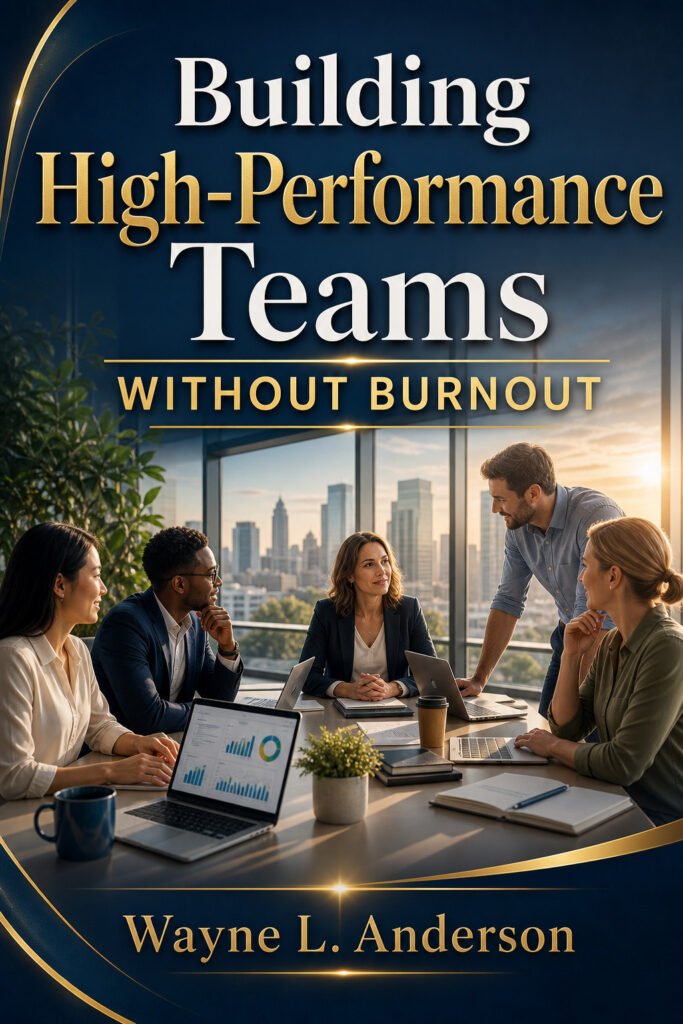
Building High-Performance Teams Without Burnout
By Wayne L. Anderson, CMC
Founder of the Leadership Science Institute
Building High-Performance Teams Without Burnout is a practical leadership book by executive coach Wayne L. Anderson, CMC, for directors, VPs, HR leaders, and C-suite executives. Using the Cost-Recovery-Results Model and seven ready-to-use tools, it shows leaders how to deliver strong, repeatable results while protecting team capacity, so people can perform under pressure, recover, and succeed again.
Available Formats
- Kindle eBook: $9.95 (274 pages)
- Paperback: $14.95 (300 pages)
- Hardcover: $21.95 (300 pages)
Your team is hitting its targets. But what is success costing them?
Late-night messages. Constant urgency. Rising mistakes. Reliable people quietly carrying more than their share. It can look like high performance. Often, it’s a team borrowing against its future.
Building High-Performance Teams Without Burnout shows you how to deliver strong, repeatable results without making exhaustion the price of success.
What is the Cost-Recovery-Results Model?
It’s the framework at the heart of the book. It helps you see three things clearly: what work demands from people, how they restore their capacity, and whether the results they produce can last.
What Will You Learn?
- Recognize early warning signs of overload before they become serious performance problems.
- Replace constant firefighting with clearer priorities, ownership, and decision-making.
- Build trust and psychological safety while keeping high standards and accountability.
- Make hidden workloads visible and share demands more fairly.
- Give direct, useful feedback without humiliating people or creating unnecessary strain.
- Handle conflict, change, and difficult conversations with greater steadiness.
- Protect managers from becoming the organization’s permanent shock absorbers.
- Build recovery into everyday work instead of saving it as a reward for surviving a crisis.
- Measure quality, retention risk, and team energy alongside output.
What Tools Are Included?
There are seven tools you can put to work right away:
- Team Health Snapshot
- Red-Amber-Green Workload Review
- Priority Reset
- Capacity Map
- Observation-Impact-Next Step feedback method
- Manager Load Audit
- 30-Day Team Reset
Examples from five kinds of teams (sales, engineering, operations, consulting, and support) connect the ideas to the pressures leaders actually face.
Who Is This Book For?
It’s written for directors, senior managers, VPs, SVPs, HR executives, C-suite executives, and chiefs of staff. Managers, team leaders, business owners, and leadership coaches will find it just as useful.
About the Author
Wayne L. Anderson is an international executive leadership coach, a Certified Master Coach (CMC), and the founder of the Leadership Science Institute. He also holds a certification in Applied Neuroscience. The book combines practical leadership experience with neuroscience-informed insight. It focuses on changing the conditions that drain your team, rather than simply asking people to become more resilient.
This isn’t another call to “do more with less.” You don’t have to choose between caring about people and expecting excellent work. You need a way of leading that supports both.
High performance isn’t about how much your team can endure. It’s about what they can sustain.
Available in Kindle eBook, paperback, and hardcover.
How to Choose a Leadership Book on Preventing Team Burnout
What to look for in a leadership book on team burnout: frameworks, tools, price ranges, and which type best fits managers, HR leaders, and executives.
When choosing a leadership book on building high-performing teams without burnout, three factors matter most: whether it treats burnout as a team and workload problem rather than a personal one, whether it gives you ready-to-use tools you can run with your team, and whether its examples match the pressures your teams actually face.
What is a leadership book on team burnout?
A leadership book on team burnout is a guide for people who manage others and want strong results without exhausting the people who deliver them. It is different from a personal self-help book on stress. It focuses on the conditions a leader controls: workload, priorities, decision rights, feedback, meetings, and recovery time. Readers are usually managers, directors, VPs, HR leaders, and executives. The goal is a team that can perform, recover, and perform again.
What does a useful leadership book on team burnout include?
A useful one provides you a way to see the problem and a way to act on it. Look for five things.
- A clear framework. A named model helps you explain the problem to peers and to your own boss. Without one, you get a collection of tips.
- Tools you can use this week. Checklists, worksheets, meeting agendas, and review templates turn ideas into action. Count them before you buy. The table of contents or Amazon’s Look Inside preview usually shows them.
- Early warning signs. Burnout usually develops gradually. The book should help you spot overload before it turns into resignations. Typical signals are rising errors, late-night messages, and quiet people carrying extra work.
- Respect for standards. The best books don’t ask you to lower the bar. They show you how to keep accountability high while making demands fairer and more visible.
Examples that resemble your world. A book built on hospital or military examples can still help a software team, but you’ll do more translating. Check which industries and team types the examples come from.
A note on evidence: some books lean on academic research, others on coaching or consulting practice. Both can be useful. What matters is that the author is clear about which is which.
How much should a leadership book on team burnout cost?
Most cost between $10 and $35, depending on format and publisher. Typical list prices at the time of writing:
- Hardcovers from major business publishers: about $27 to $32. The Burnout Epidemic by Jennifer Moss (Harvard Business Review Press) is listed at $30. The hardcover edition of The Fearless Organization by Amy Edmondson (Wiley) is priced at $32.
- Trade paperbacks: about $15 to $25. Burnout by Emily and Amelia Nagoski is listed at $17. A newer paperback edition of The Fearless Organization is listed at $24.99.
- Kindle editions: often $10 to $20, and the prices change frequently.
- Workshop kits: considerably more. The deluxe facilitator’s guide set for The Five Dysfunctions of a Team lists at $70.
Retailers often discount list prices, so check the current price on Amazon or at your preferred bookstore. If you’re buying copies for a leadership team, ask about bulk pricing. Several bulk sellers discount orders of 25 copies or more.
Most books in this category run 230 to 310 pages. Longer isn’t better. A 250-page book you finish and apply beats a 400-page one you abandon in chapter three.
Which type fits which buyer?
Books in this category fall into five broad types.
Research-based organizational books explain why burnout happens at the system level and what organizations should change. The Burnout Epidemic is a well-known example. These suit HR leaders and executives who need to make the business case.
Leadership fables teach through a story. The Five Dysfunctions of a Team by Patrick Lencioni follows a fictional CEO working with a struggling executive team. Fables suit leaders who learn best through narrative and want something easy to share. Lencioni’s book focuses on trust and accountability rather than workload.
Psychological safety books focus on whether people feel safe to speak up, admit mistakes, and challenge ideas. The Fearless Organization, by Harvard Business School professor Amy Edmondson, is the standard reference.
Personal stress-cycle books help an individual reader recover from stress. Burnout by Emily and Amelia Nagoski is a popular example, written largely around women’s experience of stress. These books help the reader, but they won’t tell you how to redesign a team’s workload.
Practitioner toolkits combine a framework with worksheets and step-by-step routines a manager can run with the team. They suit leaders who already accept that the problem is real and want to know what to do on Monday. One example is Building High-Performance Teams Without Burnout by Wayne L. Anderson, CMC (disclosure: I wrote it). It’s built around the Cost-Recovery-Results Model and includes seven named tools, among them a Capacity Map and a 30-Day Team Reset. Its examples come from sales, engineering, operations, consulting, and support teams. It’s about 300 pages in print and sells on Amazon in Kindle ($9.95), paperback ($14.95), and hardcover ($21.95). It isn’t the right pick if you want a narrative fable, an academic review of burnout research, or help with your own personal burnout rather than your team’s.
What are the red flags to watch for?
- Advice that puts the whole burden on individuals (“be more resilient”) without changing workload or priorities.
- No tools or exercises, only stories and principles.
- Promises of guaranteed results, specific retention percentages, or “burnout-proof” teams.
- An author with no visible experience leading or coaching teams, and no research to point to.
- A focus on perks such as wellness apps or team lunches instead of how work is planned and shared.
How do you get the most from the book after you buy it?
Select one tool or idea and implement it with your team within two weeks. Read it alongside a peer or your leadership team so you share the same language. Measure something before and after, even something simple: missed deadlines, after-hours messages, or a one-question pulse on team energy. Come back to the book at your next planning cycle, when priorities are reset anyway.
Which book type fits your role?
| Buyer type | Recommended option type | Must-have feature 1 | Must-have feature 2 |
|---|---|---|---|
| First-time manager or team leader | Practitioner toolkit or short leadership fable | Simple weekly routines | Guidance for difficult conversations |
| Director, VP, or SVP leading several teams | Practitioner toolkit | Workload and capacity review tools | Ways to protect the managers below you |
| HR executive | Research-based organizational book | A clear business case backed by data | Organization-level measures such as retention and engagement |
| C-suite executive or chief of staff | Research-based book paired with a toolkit | Links between workload and strategic priorities | Metrics beyond output, such as quality and team energy |
| Leadership coach | Practitioner toolkit plus a psychological safety book | A framework you can teach | Exercises clients can run between sessions |
| Individual feeling burned out | Personal stress-cycle book | Practical recovery practices | An evidence-based explanation of stress |
Frequently Asked Questions
What is the best book on preventing team burnout for managers?
There is no single best book; the right one depends on whether you need a business case, a story, or tools. Managers who want to act quickly usually obtain the most from a practitioner toolkit with worksheets and routines. HR leaders often prefer research-based titles such as The Burnout Epidemic by Jennifer Moss, which explain the organizational causes.
How much does a leadership book on burnout cost?
Most leadership books on burnout cost between $10 and $35. Kindle editions usually run about $10 to $20, trade paperbacks about $15 to $25, and hardcovers from major business publishers about $27 to $32 at list price. Workshop kits and facilitator sets cost more, sometimes $70 or higher. Retailers frequently discount list prices.
What should I look for in a book about team burnout?
Look for a clear framework, tools you can use right away, and examples that match your kind of team. Also check that it covers early warning signs of overload, keeps standards high rather than lowering them, and is honest about whether its advice comes from research, coaching practice, or both.
Is the Five Dysfunctions of a Team effective for burnout?
It is useful for team trust and accountability, but it is not mainly a burnout book. Patrick Lencioni’s fable focuses on dysfunctions such as absence of trust and avoidance of accountability. Leaders dealing with overload, workload imbalance, or recovery will usually want to pair it with a book that addresses capacity and workload directly.
What is the difference between a personal burnout book and a leadership burnout book?
A personal burnout book helps you manage your own stress, while a leadership burnout book helps you change the conditions your team works in. Personal books cover recovery habits and the stress response. Leadership books cover workload, priorities, feedback, decision-making, and how teams share demands.
What are the signs my team is heading toward burnout?
Common early signs include rising mistakes, constant urgency, late-night messages, and reliable people quietly carrying more than their share. You may also see slower decisions, more conflict, and less willingness to speak up. These signals often appear while the team is still hitting its targets, which is why they are easy to miss.
What is the best leadership book for HR executives on employee well-being?
HR executives usually get the most from a research-based book that makes the business case, paired with a practical toolkit managers can use. The Burnout Epidemic by Jennifer Moss covers organizational causes, and The Fearless Organization by Amy Edmondson covers psychological safety. A toolkit then helps managers turn those ideas into team routines.
Is a leadership book enough to fix burnout on my team?
No, a book alone will not fix burnout, but it can give you a framework and tools to start. Lasting change comes from how work is planned, prioritized, and shared. Pick one tool, try it with your team within two weeks, and track a simple measure such as missed deadlines or after-hours messages. You may also want to consider engaging a professional coach. Click here for a 30-minute consultation with me if engaging a coach interests you.
Should you choose a Kindle or paperback for a leadership book with worksheets?
Choose paperback or hardcover if you plan to fill in worksheets or share the book with your team, and Kindle if you want a lower price and easy searching. One practical approach is to buy the ebook first to evaluate it, then a print copy if you plan to use the tools often.
How long are most leadership books on burnout?
Most run between about 230 and 310 pages in print. The Burnout Epidemic runs between 256 and 288 pages depending on the listing, The Fearless Organization is 256 pages, and Burnout by Emily and Amelia Nagoski is 304 pages in paperback. Length matters less than whether the book gives you tools you will actually finish and use.
Which leadership book is best for coaches working with burned-out teams?
Leadership coaches usually need a book with a teachable framework and exercises clients can run between sessions. Practitioner toolkits best meet that need. Pairing one with a psychological safety title such as The Fearless Organization gives coaches both the tools and the research base to explain why speaking up matters. You may want to consider engaging a professional coach. Click here for a 30-minute consultation with me if engaging a coach interests you.